Best Indoor Pee Pads for Dogs: A Buyer’s Guide to Washable and Disposable Options
Best Overall: Potty Buddy Washable Pads — reusable, leak-proof, and built to cut long-term cost through a long indoor season. Best Budget: Amazon Basics Disposable Training Pads — affordable multipacks for short-term potty training. Best for Large Spaces: Scott Shop Towels 36″×36″ — oversized coverage for big dogs and open floor plans.
How these pads were compared: This guide evaluates popular indoor pee pads using manufacturer specifications, retailer product listings, and aggregated owner reviews. Recommendations reflect that research — how each pad performs on absorbency, leak protection, sizing, odor control, and cost over time — so you can match the right pad to your dog and your home.
Introduction
Indoor pee pads aren’t all the same, and the differences add up fast when a dog relies on them for weeks or months. Between smell, leaking, and the waste of throwing away a small mountain of plastic-lined pads every week, the wrong pad gets expensive and frustrating. For an unvaccinated puppy, a high-rise apartment with no quick outdoor access, or a long indoor winter when the yard is buried under snow, the right pad makes a real difference to floors, odor, and budget. This guide breaks down the main brands and pad types, with specific specs, honest trade-offs, and a clear pick for every situation.
What Makes a Good Indoor Pee Pad
Not all puppy pee pads are created equal. These are the factors that matter most when choosing one:
- Absorbency — How much liquid a pad can hold without pooling on top. Multi-layer pads are recommended for better absorbency, and thicker pads generally hold more than thinner ones. The goal is a pad that locks moisture in fast rather than letting it track across the floor.
- Leak-proof backing — Pads only keep floors clean and dry if the backing actually works. Reliable leak and tracking prevention protects hardwood, and a non-slip backing reduces the risk of the pad sliding during use — a common problem with flimsy options.
- Odor control — Keeping a house livable with a dog indoors for months is no small thing. Key features include absorbency and layer count, size, and odor control — especially for a pad that sits near the door all day.
- Size for space and breed — Standard disposable pads are typically 22 to 23 inches square, but larger sizes go up to 36 inches square. Matching pad size to the dog’s breed helps prevent misses, and using larger pads can improve training results by giving more room.
- Reusability and cost-over-time — Disposables offer convenience; washable pads are eco-friendly and cheaper across a full season. For budget-conscious owners, the real question is what saves money over the whole winter.
- Environmental impact — Throwing out three to four pads a day for months adds up. A good eco-friendly option cuts waste without sacrificing performance.
Comparison at a Glance
| Product | Best For | Type | Size | Absorbency | Approx. Price |
|---|---|---|---|---|---|
| Potty Buddy Washable Pads | Overall pick / long-term savings | Washable | 5 sizes available | Multi-layer, ultra-absorbent | ~$29.90 (single); up to 35% off multipacks |
| Amazon Basics Disposable | Budget training | Disposable | 22×22 in (regular) | ~2 cups (standard) | ~$8.99 / 30-pack |
| Scott Shop Towels 36×36 | Large dogs / big spaces | Disposable alternative | 36×36 in | High initial absorption | ~$15–20 per roll |
| Pads with Activated Charcoal | Odor control | Disposable | Varies | Standard+ with carbon layer | ~$20–30 / 50-pack |
| Pet Parents Pawtect | Eco-conscious reuse | Washable | Up to 41×41 in | WickQuick multi-layer | ~$25–35 per pad |
| Caldwell’s Washable Pads | Small puppies / toy breeds | Washable | ~30×36 in | 5-layer design | ~$22 / 2-pack |
| Amazon Basics XL Heavy Duty | Senior dogs / incontinence | Disposable | 28×34 in | ~3 cups | ~$25–28 / 50-pack |
Takeaway: The right dog pee pad depends on the dog’s age and needs — but for most families using pads through an entire season, washable pads pay for themselves fast.
The Top Indoor Pee Pads, Compared
Best Overall: Potty Buddy Washable Pads
Potty Buddy is a reusable pad built for owners who want to stop rebuying disposables. These washable pads come in 5 sizes and 9 designs, are OEKO-TEX® Standard 100 certified (meaning they’re tested free from harmful substances), and use a multi-layer construction with an ultra-absorbent core and leak-proof backing. They’re machine washable and reusable — which is where the long-term value shows up.
Strengths: The Potty Buddy pad is designed to hold up through a full season of rotation — most owners keep two or three in the house and cycle them through the wash. The leak-proof backing is built to protect hardwood and other hard floors even under heavy use, and the savings add up quickly against buying pack after pack of disposables. A chew-resistant design and a quick-drying top sheet round it out, along with the reduced waste of a reusable product.
Trade-offs: The upfront cost is higher — around $29.90 per pad at full price, though multipacks bring that down by up to 35%. There’s also the laundry step: washable pads take more cleaning than disposables, which is one more load on top of everything else a busy household runs. A 60-day money-back guarantee helps offset the risk of trying them.
Best for: Families who want long-term savings, less waste, and a pad that holds up all season. For an eco-friendly household — or anyone tired of running to the store for more disposables — this is the go-to.
Verdict: Best value over time, hands down. For anyone using pads beyond a week or two of training, the reusable design typically pays for itself within about six weeks of daily use and holds up through hundreds of washes.
Best Budget: Amazon Basics Disposable Training Pads
These are the puppy pads most dog owners reach for first — and for good reason. Amazon Basics regular pads come in at about 22×22 inches with a 5-layer construction (non-woven top, absorbent core with super absorbent polymer, and waterproof backing). A 22-inch square is considered regular size. The standard version absorbs roughly 2 cups of liquid, and pricing runs about $8.99 for a 30-pack.
Strengths: Low upfront cost and dead-simple convenience — toss the used pad and lay down a fresh one. Many disposable pads include a pheromone attractant that helps a puppy figure out where to go, and a quick-dry surface keeps paw tracking down. They’re a practical option for dogs left home alone when you need a fast, easy way to manage accidents.
Trade-offs: The ongoing cost adds up. At 3 pads a day through a 90-day winter stretch, that’s 270 pads — around $81 just for standard size. Odor control is average at best, cheaper versions can feel damp on top, and the waste is hard to ignore.
Best for: Short-term house training on a tight budget, or as a backup for travel, crate training, and overnight use.
Verdict: Great for a week or a month — but for a long winter indoors, the disposable math stops making sense pretty quickly.
Best for Large Dogs: Scott Shop Towels 36″×36″
This is an unconventional pick worth knowing about. Scott Shop Towels are industrial-strength, cloth-like paper towels originally built for workshop spills. At 36×36 inches, each sheet covers a huge area — bigger than almost any standard pad — making them a solid option for large breeds and open floor plans.
Strengths: The sheer size. Coverage up to 36 inches square means fewer misses, which is a relief with a bigger dog, and initial absorption is strong on lighter accidents. For dogs who need room to circle and sniff before committing, the extra real estate helps.
Trade-offs: These lack a waterproof backing, so on heavy saturation they leak unless you double up or lay something underneath. There’s no built-in attractant and no odor-control layer. They’re a creative solution, not a purpose-built pad, and it shows with repeated use.
Best for: Large breeds, multi-dog households, or open floor plans where maximum coverage matters. Layer them over a waterproof mat for best results.
Verdict: Smart for coverage, but plan on pairing with a waterproof layer underneath. Not a standalone solution for heavy use.
Best Odor Control: Pads with Activated Charcoal Layer
Some pads are designed with a carbon tissue layer for odor neutralization, and they’re worth seeking out for a pad corner that starts to smell. Pads with activated charcoal help control odors effectively — the carbon layer traps smell before it fills the room. Some also include pheromone attractants.
Strengths: The smell difference is noticeable, and even after a few hours the odor stays contained. Pheromone versions double as a training tool by drawing dogs to the pad. If odor control is the biggest frustration, these deliver.
Trade-offs: Premium pricing — expect $20–30 for a 50-pack. Some scented versions can bother sensitive pets, so it’s worth testing scented options around kids and other pets before committing.
Best for: Homes with persistent smell issues, apartment living, or anyone tired of lingering odor near the door.
Verdict: Worth the upgrade if odor is the pain point. The charcoal layer makes a real, noticeable difference.
Best for Small Puppies: Caldwell’s Washable Pads
Pads need to match the dog’s breed and training stage to be effective, and for tiny pups Caldwell’s hits the sweet spot. These feature a 5-layer construction with TPU waterproof backing, run around 30×36 inches, and cost roughly $22 for a two-pack. For small dogs and toy breeds, that’s more than enough coverage.
Strengths: Right-sized for small accidents, so a puppy doesn’t get lost on it the way it might on an oversized pad, and the soft top sheet is comfortable underfoot. The 5 layers handle small messes without leaking, and washing is easy.
Trade-offs: Small puppies can outgrow it within a few months, at which point larger sizes are needed. For bigger breeds or heavy pee-ers, the absorbency falls short.
Best for: Toy breeds, very young pups, and owners who want a compact, washable option for early-stage potty training.
Verdict: A perfect starter pad for small puppies — just plan to size up as the dog grows.
Best Eco-Friendly Disposable: Bamboo Fiber Core Pads
For families who want the convenience of disposable with less environmental guilt, bamboo and plant-based core pads are showing up from more brands in 2025 and 2026. They use bamboo fiber instead of traditional polymer-heavy cores, reducing plastic waste without fully sacrificing absorbency.
Strengths: Guilt-free disposal, a familiar pad format, and reasonable performance for moderate use. For owners who aren’t ready to commit to reusable pads but care about waste, these are a solid middle ground.
Trade-offs: They’re pricier than standard disposables and slightly less leak-proof than SAP-based pads. Availability can be spotty depending on where you shop, and performance still trails traditional polymer pads under heavy saturation.
Best for: Eco-conscious owners who want a disposable that aligns with their values without the laundry commitment.
Verdict: A step in the right direction — but for anyone already eco-motivated, the full switch to washable pads like Potty Buddy saves even more waste.
Best for Senior Dogs: Amazon Basics XL Heavy Duty
Pads help senior dogs with incontinence issues, and the Amazon Basics XL Heavy Duty pads handle bigger volumes than most. At 28×34 inches with approximately 3 cups of absorbency, they’re built for a senior dog who can’t always make it outdoors — or for overnight use when accidents happen.
Strengths: Maximum absorbency in a disposable. The super absorbent polymer locks liquid into a gel so the surface stays dry, reducing mess and paw tracking. At around $25–28 for a 50-pack, they’re reasonably priced for heavy-duty use.
Trade-offs: Still disposable, still generating waste. At 2–3 pads per night, costs and trash pile up, and odor control is adequate rather than outstanding.
Best for: Older dogs with bladder-control issues, overnight protection, or any situation where high absorbency is the priority.
Verdict: One of the strongest absorbent disposables in this comparison, and a practical necessity for senior pets. Pair with a washable pad underneath for extra floor protection.
Washable vs Disposable: The Real Cost Over a Year
Here’s how the math typically works out across a family budget.
Disposable math: At 3 standard disposable pads a day, roughly $0.30 per pad, through a heavy-use winter (about 90 days), that’s 270 pads — around $81. Stretch that across a full indoor season (closer to 5 months in colder climates) and it’s $135 or more, not counting late-night store runs.
Washable math: Three Potty Buddy pads at around $29.90 each (less with multipacks — up to 35% off) puts the upfront cost at roughly $60–90. Add maybe $15–30 for water, electricity, and detergent across the season. Total: under $120, with the pads still usable next winter.
Break-even point: About 4–8 weeks of daily use, depending on how many pads are in rotation and how often they’re washed. After that, every use is basically free.
The environmental math is even clearer: disposables send plastic film, pulp, and packaging to the landfill every single day, while washable pads cut that to near zero. Disposable pads still make sense for travel, crate use, or short-term training — but for a family getting through a long winter indoors, reusable wins on cost and on waste.
Getting Your Puppy to Use the Pad
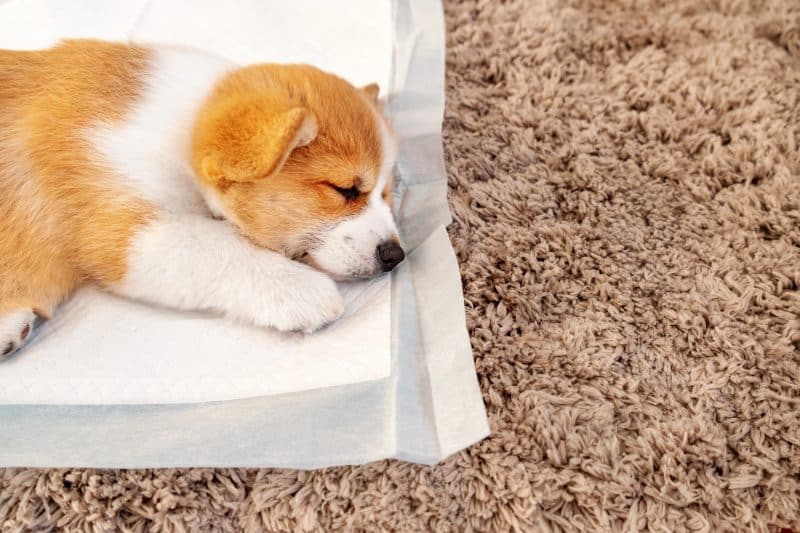
Pee pads are ideal for unvaccinated city puppies who can’t safely go outdoors yet, and they’re just as useful during the worst winter months when the grass is buried under snow. Here’s what typically works:
- Pick one spot and stick with it. — Put the pad near the door — the same door you’ll eventually use for outdoor trips. Consistency is the easy way to build a habit, since the puppy needs to associate that location with potty time.
- Build a schedule around winter reality. — When it’s below freezing and a pup isn’t fully vaccinated, indoors is indoors. Aim for pad trips every 2 hours during the day and right after food, water, play, and naps. Nights are trickier — many owners set an alarm for the first month.
- Use an attractant spray or pheromone pad. — Some disposable pads contain pheromones that help a puppy “get it” faster. For washable pads, a separate attractant spray does the same job.
- Use positive reinforcement only. — Treats and praise the moment the puppy hits the pad. No scolding for misses — just quiet cleanup and redirect. The AKC and ASPCA both recommend using pads as a temporary tool, with a gradual transition to outdoor training once weather and vaccination status allow.
- Transition to outdoors as weather improves. — As spring arrives, move the pad closer to the door, then just outside. Most pups make the switch to grass within a couple of weeks. The goal is always to get the pup outdoors — the pad is the bridge, not the destination.
Frequently Asked Questions
How many pads does a puppy need per day?
Most puppies need 3–5 pad changes per day, depending on age, size, and how much water they drink. Very young pups go more often. Many owners go through about 4 per day at peak training — plan for at least a week’s worth to stay ahead.
Do pads slow down outdoor potty training?
They can if used indefinitely without a plan. House-training experts recommend using pads as a temporary step, not a permanent setup. Start transitioning to outdoors as soon as the puppy is fully vaccinated and the weather allows. Most pups adapt quickly once the routine shifts.
What if my puppy keeps missing the pad?
Size matters — larger pads improve training results by giving more room for the puppy to land correctly. Also check placement: pads near walls or corners work better than pads in the middle of a room. For consistent misses, try a bigger mat or add a second pad next to the first.
Are washable pads really cheaper long-term?
Yes. A family using 3 disposable pads per day spends roughly $81 over 90 days. Three Potty Buddy washable pads cost around $60–90 upfront, plus about $15–30 in laundry for the entire season. Break-even lands around month two, with savings every month after. They’re the best value for anyone using pads beyond a few weeks.
How do I keep odor under control with multiple daily changes?
Change pads before they’re fully saturated — that’s the single biggest thing. For washable pads, washing in warm or hot water with a pet-safe detergent removes lingering smell. For disposables, pads with activated charcoal help control odors effectively. Keep pads away from food and living areas, and ventilate the room when you can.
What size pad do I need for my breed?
A 22-inch square is regular size and works well for small dogs and puppies under 20 lbs. Medium breeds do better with 28×34-inch pads. Large breeds or multi-dog setups should look at 36-inch or larger options. Pads need to match the dog’s breed and training stage — when in doubt, size up.
Are scented pads safe around kids and pets?
Some attractant scents and fragrances can irritate sensitive pets or young children. Test a single pad in a small area first. Unscented pads with charcoal-based odor control are generally the safer choice for households with babies, cats, or allergy-prone family members.
When should I worry about frequent indoor accidents?
If a puppy is having significantly more accidents than usual, or a previously trained dog starts going indoors again, it’s worth a vet visit. Frequent accidents can signal urinary tract infections, bladder issues, or other health concerns that go beyond training.
The Verdict
Across brands and pad types, Potty Buddy Washable Pads stand out as the top overall pick. They save money, cut waste, protect floors, and hold up through months of daily use and washing — a combination that’s hard to beat for anyone juggling a puppy, a house, and a budget.
That said, the right pad depends on the situation. For a cheap, short-term option while a pup finishes shots, Amazon Basics disposables are a smart buy. For a senior dog that needs heavy overnight absorbency, the XL Heavy Duty pads handle it. And for a high-rise or a small apartment with limited outdoor access, any of these options will keep a home livable.
Every pad on this list solves a real problem for real owners. Pick the one that fits your life — your dog (and your floors) will thank you.