Choosing an Engagement Ring for a Wisconsin Winter
Bring Your Winter Coat to the Ring Appointment
Your coat is over the chair, your gloves are in a pocket, and the ring looks lovely under the lights. It’s easy to spend the whole appointment looking down at your hand.
Before you decide, put the coat back on. In Wisconsin, a ring will spend plenty of ordinary days beside thick cuffs, knitted sleeves, and gloves pulled on while someone waits by the car. Those clothes deserve a place in the fitting, alongside the photograph you saved because you loved the ring.
Keep the design you love in the running
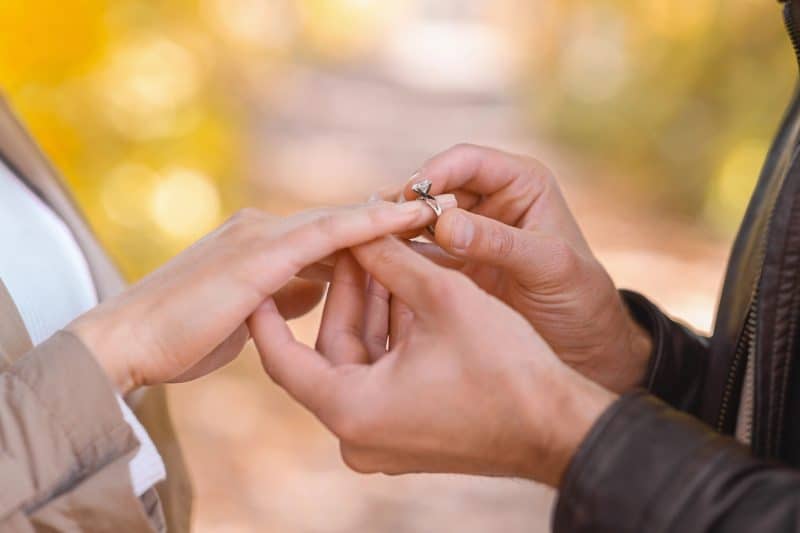
Start by naming what caught your eye. “I like the oval and the plain band” gives you something to hold on to when the practical questions begin. You can ask about a different setting height without immediately abandoning the shape you wanted.
Lily Arkwright’s engagement-ring collection includes prong-set designs and rings with a bezel, a metal rim around the stone. As you shop the ring range, save a side view with your favorite overhead image. It will help you explain which details appeal and what you want to try with your gloves.
If you love a raised setting or a decorated band, keep it on the shortlist. The point of a fitting is to understand how a design feels in use, including when you would prefer to take it off.
Let your hands warm up before settling the size
Tell the jeweler if you have just come in from the cold. GIA’s ring-sizing guidance notes that temperature can affect finger size and recommends professional measurement. Let your hands return to a comfortable indoor temperature, then have the intended finger measured.
A ring that seems loose right after a walk from the car needs a proper assessment, not an immediate decision to order a smaller size. Explain how your usual rings fit at different times and ask the jeweler to account for the band you’ve chosen.
If you’re ordering online, you can still arrange a professional measurement locally. Confirm which sizing system the seller uses and how it records your size, particularly when ordering from another country.
Look from the side before reaching for a glove
An overhead photograph tells you little about how far the stone sits above the finger. Ask to see that profile while wearing the ring, then rest your hand naturally instead of holding your fingers out for inspection.
GIA’s guide to ring settings explains that raised prong edges can catch on fabric, while a bezel’s smoother edges are less likely to catch on clothing or gloves. That makes a bezel worth comparing if snagging bothers you. It does not tell you the height of every bezel-set ring.
Ask the jeweler how high the top of the stone will sit on the version you’re ordering. A different center stone or altered setting can change the sample’s proportions. “Will mine sit at this height?” is a more useful question than relying on a label such as “low profile”.
Try your own gloves gently
Bring the pair you actually wear for errands. A thin knitted glove and a roomy insulated mitten can feel quite different over the same ring. If you plan to wear a wedding band too, add a sample in the width you’re considering before the glove test. Check the combined fit and the space under the lining.
With the jeweler’s permission, ease the glove on slowly. Notice pressure over the stone or catching at the lining, and check whether you can move your fingers comfortably. If anything feels wrong, ask: “Is this pressure from the setting’s height, or is the lining catching on a particular part?” Take it off carefully; if it resists, stop and ask for help rather than pulling harder.
Then fasten your coat and reach into the pocket where you keep your keys. A ribbed cuff may sit against the ring differently from a smooth lining. These small movements give you more to go on than another minute turning your hand under the counter lights.
You might decide that another glove works better, or that the ring stays home for certain outings. A roomier mitten can be part of the solution. You don’t have to make the ring do all the adapting.
Decide where it goes when it comes off
Think about shoveling the path, a gym session or an afternoon working in the garden once spring arrives. GIA’s diamond-ring care advice recommends removing rings for exercise and gardening, and storing pieces separately in padded boxes or soft pouches. Gloves aren’t a substitute for deciding whether the ring belongs in the activity.
Choose a closed, padded case in a drawer at home for those times. The loose coat pocket with a receipt, a lip balm and yesterday’s shopping list is a much less reliable arrangement. Put the ring away before the rush to get outside begins.
At the end of the appointment, take one last look with your gloves off and your hand relaxed beside your coat. You’ve checked the practical bits. Now see whether this is still the ring you’re excited to put on when you get home.