Why Does Jumping on a Trampoline Feel So Good?
Ask anyone who grew up with a trampoline in the backyard, and you will hear the same thing: a giddy lightness that is hard to find anywhere else. Kids beg for ten more minutes. Adults who swore they were only there to supervise somehow end up taking a turn. So what is happening when we bounce, and why does the urge to keep going feel almost impossible to resist?
The answer sits somewhere between biology and plain joy. It also explains why so many families end up debating whether a trampoline belongs in their own yard.
What happens in your body when you bounce?
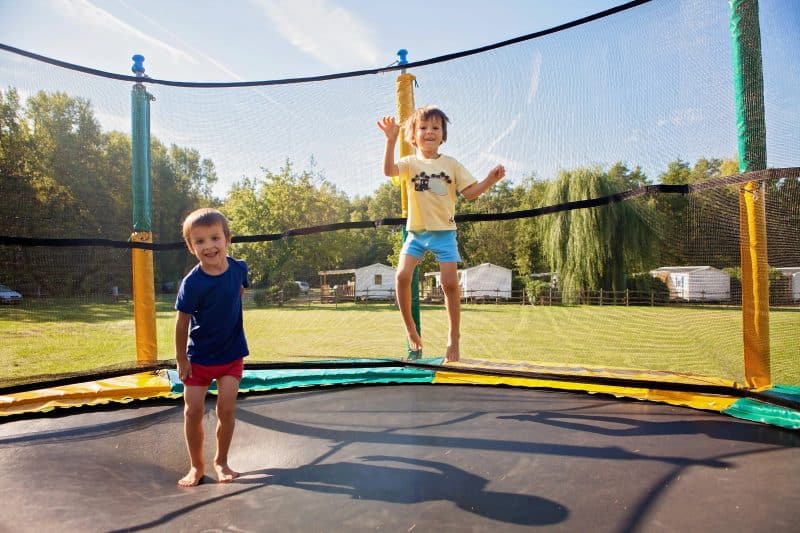
Every jump asks your muscles to load up and then absorb the landing. Within the first minute, your heart rate climbs. Your inner ear, the part of you in charge of balance, gets a workout most adults never give it. The whole body wakes up at once.
Then there is the mood side. Steady, repetitive motion, like bouncing, triggers the release of endorphins, the same feel-good chemicals behind that loose, easy calm after a long walk or a swim. A child who has been stuck at a desk all day can burn off restless energy in ten minutes and come inside in a completely different mood. Parents tend to notice the change before the kids do.
That mix of fun and genuine effort is why a sturdy Vuly trampoline tends to get used every single day rather than gathering leaves in a corner. When the frame and springs withstand relentless bouncing, the trampoline stops being a one-summer novelty and becomes part of the daily rhythm of the house.
Is it real exercise or just play?
Both at once, which is what catches people off guard. Ten minutes of bouncing raises the heart rate to a level comparable with jogging, yet most kids would never describe it as a workout. They think they are playing. Their bodies disagree.
NASA studied rebounding decades ago and found it an efficient way to build cardiovascular fitness without the joint pounding of running on pavement. The surface gives a little on every landing, so knees and ankles take far less of a beating. For families where someone finds the gym dull or the weather keeps everyone indoors half the year, that low-impact quality counts for a lot.
Does bouncing help kids wind down at night?
More than you might assume. Afternoon activity steadies the sleep cycle, and bouncing burns off the kind of pent-up energy that otherwise turns into bedtime chaos. A child who has jumped for half an hour after school is usually a child who falls asleep without a fight.
One more angle matters for some kids. The deep, rhythmic input from jumping has a settling effect on a busy nervous system, which is part of why occupational therapists sometimes use mini trampolines with children who struggle to sit still. The bouncing gives the body what it has been asking for, and the restlessness eases off.
Isn’t safety the obvious catch?
It used to be. Older backyard trampolines earned a bad reputation because the springs sat exposed and there was nothing to stop a kid sailing off the edge. Modern designs solved most of that. Enclosure nets keep jumpers in the middle, and springs are either hidden under thick padding or replaced entirely by flexible rods around the rim.
The remaining risks come down to how the trampoline gets used rather than the equipment itself. Most injuries occur when kids of mismatched sizes collide, because the smaller child gets launched by the larger one. One jumper at a time is the rule that prevents most accidents. Setting the frame on level ground and checking the net for wear every few weeks handles almost everything else.
What separates one that lasts from one that sags?
Price tells you less than you would hope. The parts that decide whether a trampoline survives five years of kids are the ones you cannot see in a showroom photo. Galvanized steel shrugs off rust through wet winters. A UV-treated mat does not go brittle and crack after two summers in direct sun.
Diameter matters too, though bigger is not automatically better. A round trampoline about 12 feet in diameter suits most family yards and naturally pushes jumpers toward the center, which adds a layer of safety. Larger oval shapes give serious bouncers more room but eat up space fast. Measure the yard before falling in love with a size that will swallow the whole lawn.
So why does jumping feel so good? Because your body was built to move, and bouncing delivers that movement wrapped in something that feels nothing like exercise. The laughter is the point. The fitness and the steadier sleep tag along for the ride, whether the kids notice or not.