The Best Luxury Engagement Ring Brands for Classic Designs
In 1886, Charles Lewis Tiffany lifted a round diamond off the band on six slender prongs and put it into the light. Nearly every jeweler on earth has copied the design since, which is the working definition of a classic. A classic design survives its own fashion cycle, still looks correct 40 years later, and can be repaired by a competent bench in any city. Only a handful of houses have produced designs that pass all 3 tests, and the oldest of them predates the Tiffany Setting by more than a century.
Tiffany and Co, the Six-Prong Standard
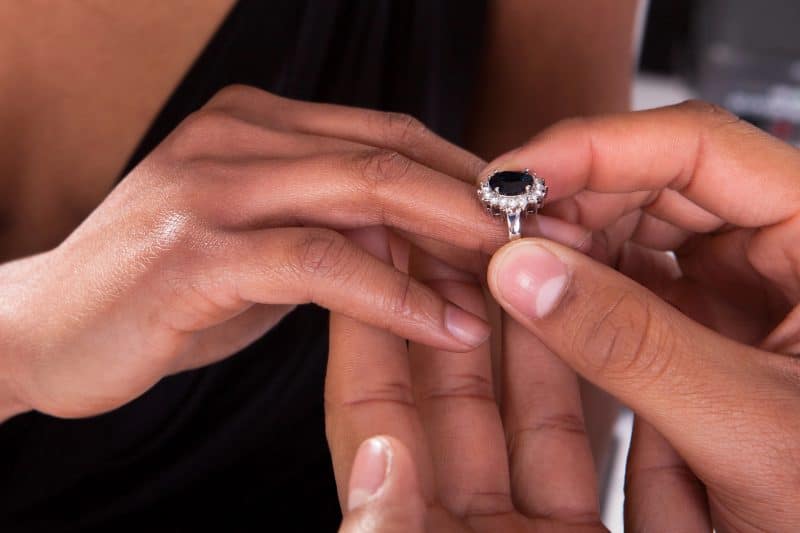
The Tiffany Setting is the reference point for the entire category. 6 prongs hold the stone above the shank so light enters from below, a solution that was radical in 1886 and is now the default expectation of what an engagement ring looks like.
The house sells almost nothing that argues with it. Bands are slim, metal choices are conservative, and everything else defers to the center stone. Buyers who want a piece that will never require explanation start here, and buyers who want to be surprised by a design should look elsewhere. The premium over a comparable independent commission is the widest in this group, and much of it buys the certainty that nobody will ask what the ring is.
Cartier and the Solitaire 1895
Cartier named its signature engagement ring for the year it was drawn, and the design has run continuously ever since. The proportions are tighter than the Tiffany version, with a lower profile and a platinum setting that holds the stone closer to the finger.
That lower profile has practical value for someone who works with their hands, since a raised stone catches on gloves and fabric. Cartier also keeps the design available across a wide range of carat weights, so the same silhouette works at 0.5 carats and at 3. The house offers the same setting in a knife-edge band and a rounded one, and that detail changes the piece’s character more than its size suggests.
Harry Winston and the Stone-First Approach
Harry Winston opened in New York in 1932 and built the house on buying extraordinary rough before designing anything around it. He owned a large share of the world’s most famous stones at various points, and the design philosophy still follows from that history.
The settings are deliberately restrained so nothing competes with the diamond. Micropavé work appears around a center stone rather than across the band, and the metal is kept as thin as structural safety allows. A buyer paying Winston prices is paying for stone selection above everything else. The house has historically declined to set stones it did not source. Winston also gave the Hope stone to a national museum in 1958, a gesture that did more for the house’s standing than any advertising campaign since.
Van Cleef and Arpels and the Beaded Contour
Van Cleef and Arpels opened in Paris in 1906, and its Perlée motif, a row of fine metal beads running along an edge, has appeared on the house’s work for decades. The beading gives an outline definition without adding a single stone, and it is old enough now that people who have never set foot in the boutique recognize the motif at a glance.
That contour suits a rounded outline, which is why an oval diamond ring in a beaded mount looks continuous while a sharp-cornered stone can fight the curve. The house also holds its value better than almost anything else in the category, which matters to buyers thinking past the wedding. Core collections commonly return 60% to 80% of retail on the secondary market, and the strongest vintage pieces have sold for more than their original price.
Boucheron and the Place Vendome Tradition
Frédéric Boucheron opened his house in 1858 and was the first jeweler to take a boutique on Place Vendome, the octagonal plaza laid out in 1702 that now holds most of the French houses. The bridal work shows that age. It favors architectural lines, question-mark curves, and settings that use metal as a design element in its own right.
Boucheron suits a buyer who wants a recognizably French classic without the ubiquity of the larger houses. The pieces look older than they are. Some buyers want exactly that, while others find the effect dated within a year of wearing it.
Chaumet and the Napoleonic Line
Chaumet dates to 1780 and served as Napoleon’s jeweler, giving it the longest continuous history of any house on this list. It has occupied number 12 on the same Paris square since 1902, in the building where Chopin died. The Josephine collection borrows the shape of a tiara, with a pointed center stone flanked by pavé that rises to a peak.
It is the least neutral design here and the most likely to be recognized by someone who follows jewelry. Buyers who want a classic with a specific story attached tend to end up at Chaumet.
Graff and the Cutting Room Argument
Graff buys its own rough and cuts and polishes it in-house, which is unusual even among houses at this price level. The company argues that controlling the cut produces better light performance than buying finished goods, and its settings are built to display that claim.
The designs are simple to the point of severity. There is very little decoration; the emphasis is on size and cut quality, and the house is candid that its customer is buying a stone with a mount attached. The house ranks cut above color and clarity in what it will pay for, which matches what most gemologists tell buyers. That honesty makes Graff straightforward to compare against an independent commission, since the comparison reduces to the stone itself.
Bonus: Cullen Jewellery and the Lab-Grown Approach
Cullen Jewellery is the youngest name here and the clearest example of the independent alternative. Designed in Melbourne and set only with lab-grown stones, its rings cover the classic solitaire, three-stone and halo silhouettes, and any design can be customized.
Common Properties Across the Seven Houses
Every design named here shares 3 properties. The center stone is the subject, the metal serves the structure, and the silhouette has survived at least one full swing of fashion without being redrawn. Anything that fails those 3 tests is a trend piece, no matter how old the name inside the band.
Price separates them very little. The gap between houses at equal stone quality is narrower than the gap between any of them and a comparable independent commission, so the choice among the 7 comes down to which design language a person wants to wear for the next 50 years.
The six-prong mount from 1886 is still in production, and it is still the first thing most people picture when the subject comes up. That is the only test that matters, and it takes decades to pass. Anyone choosing between these houses can shortcut the question by asking one thing about the ring in front of them. Would it have looked correct in 1975, and will it still look correct in 2065? Each design named here passes that check, which is why they cost what they cost.