How to Turn Your Child’s Love of History Into a Real-World Adventure
Some children can spend hours reading about ancient civilizations, medieval castles or famous historical figures. They remember unusual facts, ask questions about how people lived centuries ago and become fascinated by places they’ve never visited. When that interest extends beyond school assignments, parents have an opportunity to turn it into something memorable.
History doesn’t have to stay in textbooks. Museums, archaeological sites, historic neighborhoods and even local landmarks can help children understand events they’ve only read about. With some planning, families can turn a child’s curiosity into meaningful travel experiences that combine education with adventure.
Start With the Historical Period Your Child Loves Most
The best educational trips begin with subjects children already find interesting. A child fascinated by ancient Egypt will respond differently to a museum filled with Egyptian artifacts than one who prefers medieval knights or American history. Understanding those interests helps parents choose destinations and activities that feel exciting, not obligatory.
Start by asking what your child would most enjoy seeing in person. If they’re interested in dinosaurs, natural history museums and fossil sites provide opportunities to explore prehistoric life. Children fascinated by medieval history may enjoy visiting castles, while those interested in American history can explore battlefields, presidential homes and preserved historic communities.
Parents don’t need to plan an international vacation immediately. A nearby museum or historical landmark can be the starting point for a much larger interest. What matters is helping children connect information they’ve learned with places, objects and stories they can explore firsthand.
Make Historical Destinations More Engaging With Guided Experiences
Historical destinations become more meaningful when children understand the stories behind what they’re seeing. Walking through ancient ruins can be impressive, but knowing why a structure was built, how people used it and what happened there gives the experience greater depth.
Private guided tours are especially useful for families because they can adapt to children’s ages and interests. Instead of following a large group through a fixed presentation, families can ask questions, spend more time at interesting locations, and move through attractions at a comfortable pace.
For families visiting Egypt, private tours can provide a more flexible way to explore historical attractions. Travel agencies such as Inside Egypt offer private tour options that families can consider when planning visits to the Pyramids of Giza, ancient temples and other archaeological sites. A dedicated guide lets parents and children ask questions, explore topics that interest them, and better understand the history behind each location. This can make the experience more educational without forcing families to keep up with a larger tour group.
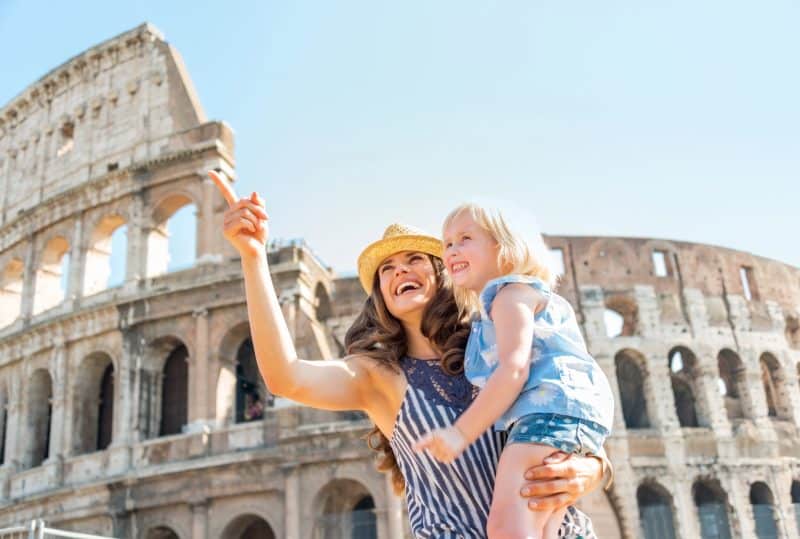
The same approach works in other historical destinations. A guided visit to Rome’s Colosseum can explain how ancient entertainment influenced Roman society, while a tour of Athens can introduce children to Greek mythology, architecture and early democratic institutions.
Use Hands-On Activities to Bring History to Life
Hands-on experiences help children understand historical concepts that are difficult to grasp through reading alone. Instead of only observing artifacts behind glass, children can participate in activities that demonstrate how people worked, created objects and solved everyday problems.
Living history museums provide opportunities to explore these ideas. At places such as Colonial Williamsburg in Virginia, families can encounter historical interpretation, traditional crafts and demonstrations connected to eighteenth-century life. Similar attractions across the United States introduce children to farming methods, blacksmithing, textile production and other historical practices.
Workshops can also make historical travel more engaging. Pottery classes, traditional cooking activities and archaeological demonstrations allow children to explore the practical skills associated with different cultures.
These experiences encourage children to ask questions beyond dates and famous names. They begin considering how people obtained food, built homes, communicated and adapted to the resources available during their time.
Turn Local History Into a Family Adventure
Exploring history doesn’t require expensive flights or visits to famous international landmarks. Local communities contain historical stories that can be just as engaging when families take the time to investigate them.
Wisconsin, for example, offers opportunities to learn about Native American history, nineteenth-century settlement and the state’s industrial development. Historic sites, regional museums and preserved buildings provide starting points for understanding how communities changed over time.
Parents can make these outings more engaging by giving children a simple activity to complete during the visit. Instead of asking them to remember every fact, encourage them to discover one specific thing.
A few ideas include:
- Find three objects that people used before electricity became common.
- Identify one major difference between historical homes and modern houses.
- Learn how children attended school or helped their families in another century.
- Choose one historical invention and explain how it changed everyday life.
These activities give children something to investigate without turning the outing into another school assignment. They also provide natural conversation topics during the trip home.
Prepare Before You Visit a Historical Site
A little preparation helps children get more out of historical attractions. When they already recognize important names, events or landmarks, they can spend less time trying to understand the basic background and more time exploring what makes the destination interesting.
Before visiting a historic location, read an age-appropriate book or watch a documentary about the period. Parents can also examine maps together, helping children understand where the destination is located and how geography influenced the people who lived there.
Keep the preparation manageable. A ten-minute conversation about ancient Roman engineering can be more useful than expecting a child to memorize several chapters before visiting an archaeological site.
It’s also worth discussing what children should expect during the visit. Some historical attractions involve considerable walking, limited shade or restrictions on touching exhibits. Knowing these details in advance helps parents plan breaks and choose activities that suit the family’s needs.
Give Children a Way to Remember What They Learned
Historical adventures become more valuable when children have opportunities to reflect on what they experienced. Instead of collecting only photographs and souvenirs, encourage them to record the stories, discoveries and questions that stood out during the trip.
A simple travel journal works well for this purpose. Younger children can draw their favorite monument or museum exhibit, while older children can write about historical events that surprised them. Adding tickets, postcards or printed photographs creates a personal record of the experience.
Families can also connect their discoveries to activities at home. After visiting a historic settlement, children could research traditional recipes or compare old household tools with their modern equivalents.
These follow-up activities help children understand history as something connected to everyday life rather than a collection of events from the distant past.
Keep Curiosity at the Center of Every Adventure
Turning a child’s love of history into a real-world adventure doesn’t require visiting every famous landmark or creating an elaborate educational itinerary. The most rewarding experiences begin with genuine curiosity and give children opportunities to explore subjects that already interest them.
A local historical museum, a guided archaeological tour or a visit to a preserved historic town can all encourage deeper learning. The key is choosing experiences that invite questions, provide meaningful context and allow children to participate rather than simply observe.
When parents make history something children can see, touch where permitted and discuss, learning becomes part of the adventure. Those experiences can strengthen a child’s interest in the past while creating family memories that last well beyond the trip.