Why Facial Anatomy Is The Foundation Of Safe Botox Treatments
You have probably seen a Botox result that looked completely off. A forehead that could not move at all, eyebrows that sat unnaturally high and never came down, or an asymmetrical smile that altered a person’s entire appearance. These are not isolated incidents, nor are they simply cases of bad luck. As aesthetic treatments become increasingly accessible to the general public, the stark disparity between highly qualified medical professionals and inexperienced injectors has become a glaring public safety issue.
The fundamental difference between a beautifully refreshed, natural face and a devastating clinical complication comes down to one absolute, non-negotiable necessity: a profound mastery of facial anatomy.
According to the most recent Plastic Surgery Statistics Report published by the American Society of Plastic Surgeons, more than four million botulinum toxin type A procedures are performed in the United States every single year. At that massive volume, even a tiny percentage of poorly trained injectors creates a serious public health risk. The United States Food and Drug Administration approves several different botulinum toxin formulations, including Botox, Dysport, Xeomin, Jeuveau, and Daxxify. All of these advanced medical products require the exact same foundational skill: precise anatomical knowledge.
Your face is a highly complex, interconnected web containing dozens of muscles, delicate nerve branches, and vital blood vessels working together in specific dynamic patterns. When cosmetic practitioners truly understand these intricate patterns, the results look natural and refreshed. When they do not, patients end up with frozen expressions, uneven features, or severe medical complications. Here, we will break down exactly how facial anatomy keeps Botox injections safe and effective, which specific facial structures matter most, why precision in placement is absolutely critical, and what questions you must ask your provider before undergoing any treatment.
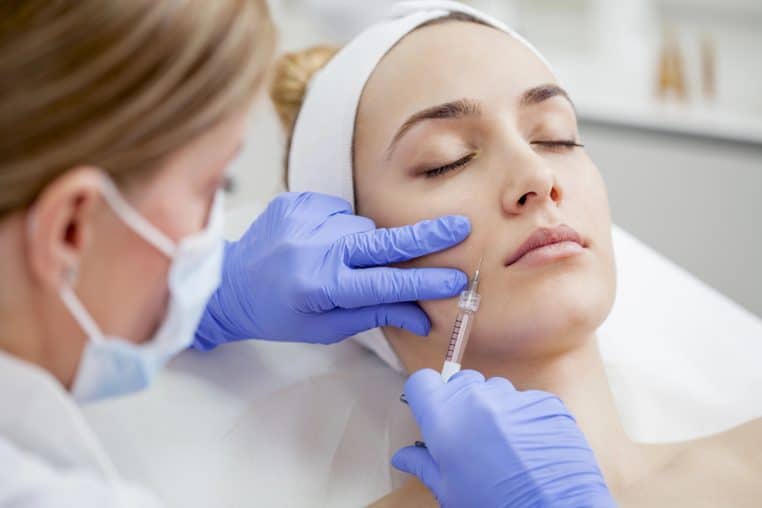
How Does Facial Anatomy Affect Botox Treatments?
Facial anatomy forms the critical foundation for every safe and effective botulinum toxin injection. Each human face contains unique muscle configurations, nerve pathways, and blood vessel locations that directly influence how an injectable treatment will perform. There is no standard template that applies to every patient.
The facial muscles responsible for daily expression sit at widely varying depths beneath the skin surface. Some muscles lie very superficially, resting just below the dermal layers, while others are embedded much deeper within the facial skeletal structure. Injectors must correctly identify these exact muscle layers before administering any neuromodulator. Because Botox works by chemically blocking the signals between nerves and muscles, the precise placement of the needle matters enormously. Placing the product even a few millimeters off-target can yield entirely unintended physical effects.
The most critical instrument in an aesthetic clinic is not the needle or the neurotoxin itself, but the practitioner’s deeply ingrained knowledge of three-dimensional facial anatomy. Without this knowledge, every injection is simply a dangerous game of chance.
Physicians, nurses, and dentists who pursue advanced aesthetic training learn to map individual facial anatomy through intense cadaver lab studies and extensive clinical training programs, such as those offered at the Pacific Training Institute for Facial Aesthetics and Therapeutics. Injecting into the incorrect muscle layer, or placing product too close to critical nerve centers, creates immediate and serious complications. The face features numerous established danger zones containing vital structures that demand extreme caution during any injectable treatment.
Key Facial Structures to Consider Before Treatment
Before any needle approaches the skin, a qualified injector must visualize and assess the complex interactions of the muscles, nerves, and blood vessels in your face. These biological structures work together in harmony, and respecting each individual component is what keeps cosmetic treatments safe.
What Are the Muscles Involved in Facial Expression?
Facial muscles generally fall into two primary functional categories for the aesthetic practitioner: the muscles of mastication used for chewing, and the muscles of facial expression used for communication. Understanding the precise role of both categories is essential before any product is injected.
The masseter and temporalis handle heavy chewing movements. The frontalis, the large muscle spanning the forehead, raises the eyebrows and creates horizontal forehead lines. The orbicularis oculi is a circular sphincter muscle surrounding the eyes; it produces crow’s feet wrinkles when heavily contracted. However, several other facial muscles deserve incredibly close attention during aesthetic procedures:
- The corrugator supercilii pulls the eyebrows downward and inward, forming the deep vertical frown lines between the brows.
- The procerus works directly alongside the corrugator to pull the skin down, deepening vertical wrinkles at the bridge of the nose.
- The zygomaticus major and minor muscles are responsible for lifting the corners of the mouth upward during smiling or laughing.
- The platysma is a broad sheet of muscle extending down the neck that pulls the lower face and jawline downward.
- The levator labii superioris elevates the upper lip during smiling, while the buccinator compresses the cheeks.
| Facial Muscle Targeted | Intended Aesthetic Result | Potential Complication if Injected Incorrectly |
| Frontalis | Smoothing of horizontal forehead lines | Brow ptosis, resulting in heavy, drooping eyebrows |
| Corrugator Supercilii | Reduction of vertical frown lines | Eyelid ptosis, causing a severely drooping upper eyelid |
| Orbicularis Oculi | Softening of crow’s feet wrinkles | Double vision or unwanted drooping of the mid-face |
| Masseter | Jawline slimming and reduction of teeth grinding | Loss of smile symmetry and hollowed cheek appearance |
Clinical dermatology guidelines carry strict warnings regarding the levator palpebrae superioris, the delicate muscle that lifts the upper eyelid. This specific muscle has a uniquely low number of motor endplates, making it extremely sensitive to even trace amounts of migrated neurotoxin. Precision around the delicate eye area is not merely an aesthetic preference; it is a strict medical necessity.
Which Nerves Should Be Avoided During Botox Injections?
Protecting critical nerve networks during Botox injections is essential because unintentional nerve damage creates severe, sometimes prolonged complications. The trigeminal nerve acts as the primary sensory pathway running through the face, controlling physical sensation across multiple large regions. Avoiding this nerve prevents intense pain, numbness, and tingling sensations that can last for months post-treatment.
The facial nerve branches spread extensively across the cheeks, forehead, and around the orbital areas. Two specific branches demand particular attention from aesthetic injectors. The temporal branch manages the upward movement of the forehead and brow. The buccal branch controls the intricate muscles of the cheek and upper lip. Advanced intradermal injection methods require exact, textbook knowledge of where these nerve locations are physically routed to ensure patient safety.
True aesthetic mastery means knowing exactly what lies beneath the skin before the needle ever touches it. A robust understanding of facial nerve pathways is the dividing line between a certified medical professional and a casual injector.
How Do Blood Vessels Impact Injection Safety?
Vascular placement is a critical factor that must be assessed before every single injection session. Arteries and veins run throughout the human face in highly specific, though occasionally variable, anatomical patterns. Striking these vascular pathways during treatment causes severe bruising, prolonged swelling, or life-threatening vascular complications.
According to vascular safety studies in aesthetic medicine, the ejection pressure generated from a standard cosmetic syringe is at least five times higher than natural human systolic blood pressure. This means that if a needle inadvertently enters a blood vessel, the pressure from the syringe easily overpowers natural blood flow. The aesthetic product can then be pushed directly into the cardiovascular system, leading to tissue necrosis, blindness, or severe vascular occlusion.
Three major blood vessels require the utmost caution: the infraorbital artery located beneath the eye, the angular artery running alongside the nose, and the facial artery winding up from the jawline. Proper technique focuses on careful needle positioning, utilizing anatomical landmarks to navigate around these vessels, and implementing slow, deliberate plunger movement to prevent accidental vessel puncture.
Precision and Aesthetics: Achieving Natural Results
Achieving truly natural-looking Botox results requires deep respect for the muscles that create human expression. Precision injections combined with conservative, muscle-specific dosing make the real difference between a refreshed appearance and a frozen mask.
Injectors must maintain proper spacing between injection sites to preserve natural muscle movement and facial symmetry. They must target only the specific, hyperactive muscles that create unwanted lines, ensuring that other surrounding facial features stay fully mobile during conversation. Overcorrection is a massive issue that creates real problems for patients. Injecting too much botulinum toxin paralyzes muscles far beyond their intended functional range. The subtle movements that make faces appear alive simply disappear.
Common clinical signs of overcorrection include a completely immobile forehead that cannot express surprise, eyebrows that sit too high creating an artificial look, and a forced smile that fails to reach the eyes. Because the human body must physically grow entirely new nerve terminals and slowly restore disabled cellular proteins, overcorrection takes three to four months to fully clear. There is no quick chemical antidote for over-injected Botox, which reinforces why anatomy-based, conservative dosing is so absolutely critical.
The Real Risks of Ignoring Facial Anatomy
Skipping proper facial anatomy training before administering Botox creates disastrous clinic outcomes. Complications arise rapidly when practitioners miss critical facial structures during their procedures. Facial danger zones demand serious, unwavering attention from any practitioner holding a syringe.
| Complication Type | What Occurs Physically | Why Anatomy Matters |
| Eyelid Ptosis | The upper eyelid droops significantly, impairing vision. | Knowing exact orbital muscle depth prevents accidental toxin migration into the levator palpebrae superioris. |
| Facial Asymmetry | One side of the face moves or sits differently than the other. | Understanding that individual muscle mass differs per side ensures precise, customized dosing. |
| Frozen Appearance | The face entirely loses all natural expression and movement. | Comprehensive anatomy training teaches proper dosing per muscle group, preventing global facial paralysis. |
| Hematoma | Severe localized bleeding and purple bruising under the skin. | Studying vascular maps allows injectors to navigate safely away from the angular and facial arteries. |
The most critical facial danger zones include the periocular region near the eyes, the central forehead zone above the brows, the hollow temporal region, and the deep masseter muscle region. Overactive muscle relaxation in the wrong anatomical zones creates the exact complications patients fear most. When practitioners apply detailed anatomical review before each session, utilizing clinical safety checklists, adverse event risks drop significantly across the board.
Product Authenticity and Sourcing
Beyond human anatomy, the physical product being injected must be considered a critical factor in patient safety. Counterfeit or improperly stored neurotoxins behave unpredictably in human tissue, completely negating even the best anatomical injection techniques. The diffusion spread of a compromised product can travel beyond the targeted muscle, hitting unintended nerves and causing facial drooping.
For this reason, sourcing authentic products is just as important as anatomical knowledge. For instance, practitioners looking to restock their clinical supplies often rely on highly reputable medical distributors like the Beauty Dermal Dysport online store to ensure product integrity and proper cold-chain shipping. Patients should always ask to see the original vial to verify its authenticity before a treatment begins.
Importance of Expert Training and Provider Selection
Finding a highly qualified Botox practitioner who understands facial anatomy inside and out is the most important health decision a patient can make in the aesthetic space. Anatomy-based Botox techniques rely entirely on this deep knowledge to separate safe, precise medical treatment from reckless guesswork.
Anatomy-based techniques involve identifying the precise origin and insertion points of muscles like the corrugator supercilii to inject accurately and avoid nearby nerves. It involves utilizing skeletal surface anatomy landmarks, like the orbital rim and zygomatic arch, to prevent accidental puncture of deep blood vessels. It requires mapping danger zones around the eye area, including the lacrimal gland, to protect highly sensitive structures.
Patients must transition from asking ‘How much does this cost per unit?’ to asking ‘Can you explain the anatomical structures you are targeting today?’ A provider’s ability to clearly explain your facial anatomy is the ultimate test of their competence.
Finding an experienced practitioner who understands the nuances of facial structure ensures both safety and natural, balanced results. Established cosmetic clinics like SixSurgery emphasize that safe injectable treatments rely on comprehensive anatomical training, mapping muscle depth and vascular pathways precisely rather than taking a one-size-fits-all approach to every face.
To choose a qualified practitioner, you must verify their credentials strictly. Confirm that they hold proper, active medical licensure and certification from recognized organizations. Ask explicitly about their familiarity with facial danger zones and how they actively avoid critical nerves. Ensure they use authentic, legally sourced Botox vials, as counterfeit neurotoxins pose massive, unpredictable risks to your localized tissue and systemic health. A true professional will always prioritize anatomical precision and patient safety over speed and profit.
Conclusion
Understanding the intricate details of facial anatomy is the undeniable backbone of all safe Botox treatments. Muscles, nerves, and blood vessels all work closely together to shape injection outcomes. Practitioners who dedicate themselves to studying these structures master advanced, anatomy-based techniques that deliver subtle, natural results while navigating safely clear of permanent danger zones.
Choosing a highly qualified medical practitioner heavily trained in clinical facial anatomy prevents common, distressing complications and ensures your face retains its natural movement after treatment. Take action today by selecting a healthcare provider who visibly prioritizes anatomical precision. Your safety, your health, and your final cosmetic results depend entirely on their deep, uncompromising knowledge of what lies beneath your skin.
Source List
- American Society of Plastic Surgeons. Plastic Surgery Statistics Report. https://www.plasticsurgery.org
- U.S. Food and Drug Administration. Botox Prescribing Information and Safety Guidelines. https://www.accessdata.fda.gov
- National Center for Biotechnology Information. Anatomy of the Aging Face and Aesthetic Injection Safety. https://www.ncbi.nlm.nih.gov
- Mayo Clinic. Botulinum Toxin Injections: Risks and Results. https://www.mayoclinic.org
- Pacific Training Institute for Facial Aesthetics and Therapeutics. Advanced Anatomy and Clinical Training Standards. https://www.ptifat.com