
There’s No Such Thing as Bad Weather (Just Ask Any Kid)
The Scandinavians have a saying that turns up, sooner or later, in every parenting book ever written: there is no such thing as bad weather, only bad clothes. It is the kind of tidy aphorism that is very easy to roll your eyes at from the warm side of a rain-streaked window — right up until the afternoon you actually put it to the test and watch, slightly stunned, as it works exactly as advertised.
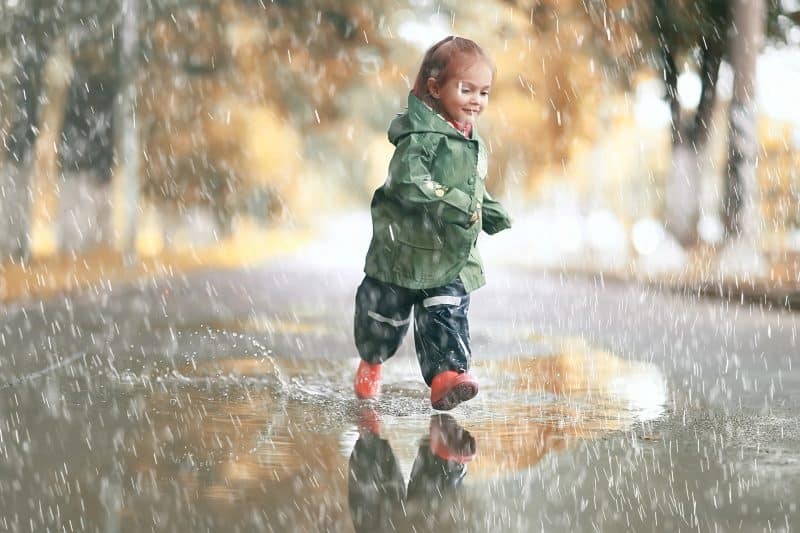
Here is the experiment, and you can run it this weekend. Take one child who is loudly, terminally ‘bored’ indoors on a grey, drizzling Saturday, the kind of day that makes the sofa and the screen feel inevitable. Now put that child in gear that genuinely keeps the weather on the outside. Open the door. Gently apply pressure if required. What follows, reliably, is ninety minutes to two hours of intensive puddle physics, serious mud engineering, and wind-assisted running — a full outdoor research program, conducted with total focus by a small scientist who, twenty minutes earlier, was allegedly far too exhausted to carry a single plate to the sink.
The lesson underneath the experiment is one worth actually internalizing, because it reframes the whole problem. Kids, as a rule, do not dislike weather. They are not making an aesthetic objection to rain. What they dislike, reasonably and universally, is being cold and wet while in it — and being cold and wet is not a weather condition at all. It’s an equipment failure. And equipment failures, unlike the weather, are entirely ours to fix. The rain is not the problem. The gap between the rain and the child is the problem, and it closes with a zipper.
The fix has three layers in theory, but only one of them does the loud, visible, weather-defeating work: the shell. A real kids rain jacket — with properly sealed seams, a hood that actually stays up in a gust instead of blowing flat, and a hem cut long enough to cover the seat of the trousers during the inevitable downhill slide — is the single piece that transforms rain from a reason to abandon the afternoon into merely one more interesting texture of it. Under the shell, nothing clever is required at all: just something warm in the middle and something dry against the skin. Get the outer layer genuinely right and the rest is easy.
Two details, and only two, separate the shells that kids happily live in from the shells that kids actively fight. The first is weight. A stiff, crackly, board-like jacket loses the war instantly at the shoulders — which is exactly where children feel restriction most acutely and resent it most loudly — so they hunch, complain, and pull it off at the first opportunity. The newer generation of fabrics keeps the weather fully out while moving as easily as a soft windbreaker, and that single quality decides whether the jacket stays on. The second detail is fit: sleeves long enough to still cover the wrists when arms stretch overhead for a branch, and enough room across the back for the full, unimpeded superhero range of motion. A shell that pins the arms is a shell that comes off. Movement-first pattern-making is the whole moodytiger method, applied identically from gym leggings to weatherproof shells — which is why a shell from a stretch specialist outplays one from a brand that began with adults.
This is precisely the terrain where the design-led children’s brands have quietly pulled ahead of the old outdoor giants, and it’s worth understanding why. Moodytiger cuts its weatherproof gear on genuine children’s proportions with freedom of movement treated as the first requirement rather than an afterthought bolted on at the end. It’s the same design instinct that makes their leggings survive a full gymnastics class — start from how a child’s body actually moves, then make it weatherproof, not the other way around. The result is a shell that survives a muddy hillside in October precisely because it was never designed to merely stand still and look rugged in a catalog.
It’s worth being honest about what ‘waterproof’ even means, because the label hides a lot and the difference shows up on a wet hillside. A cheap shell is often merely water-resistant — fine for a light shower, soaked through at the shoulders and seams within twenty minutes of real rain. A genuine kids’ rain jacket has sealed or taped seams (look inside; you’ll see the thin strips over every stitch line), a real hood with a brim or drawcord, and a coating that beads water rather than letting it spread and soak. The tell is the seams: unsealed stitching is thousands of tiny needle holes, and water finds every one. Pay for the sealed seams and the hood, skip the logo, and you’ve bought the part that actually keeps a child dry.
Layering under the shell is where parents most often go wrong, usually by overdoing it. The instinct is to pile on thickness, but a stiff, overstuffed kid can’t move and overheats the moment they run, then chills when the sweat cools — the worst of both worlds. The rule that works is thin and deliberate: a moisture-wicking base against the skin to move sweat away, a light fleece or thin down for warmth, and the shell on top to block wind and rain. Three thin, purposeful layers beat one thick one every time, because the child can shed the middle when they heat up and add it back when they stop. Dressing for weather is a system, not a single heroic coat, and kids grasp the logic fast once you explain it.
The after-play routine, unglamorous as it is, matters nearly as much as the gear itself, and it’s the step everyone skips. Wet shells want a good shake and a hang somewhere airy — never draped over a hot radiator, which slowly cooks and delaminates the waterproof membrane and shortens the jacket’s whole life. Wet boots want yesterday’s newspaper crumpled inside to draw the damp out overnight. And the small scientist wants cocoa and a patient, full debrief of the afternoon’s discoveries. Ten quiet minutes of drying discipline, and the entire kit is ready to do it all again tomorrow — which, fair warning, they will absolutely request now that they’ve discovered rain is fun.
For a small, concrete way to start, adopt one deliberately terrible-weather ritual and keep it, rain or shine. A puddle walk after every proper downpour, boots mandatory, the muddier the better. A ‘we go out on Saturday morning whatever the sky is doing’ rule that removes the daily negotiation entirely. A rain gauge in the garden the kids check and cheer. Naming it and repeating it does something quietly powerful: it reframes bad weather from a cancellation into an event, something the family actively does rather than passively endures. Kids who grow up with a wet-weather tradition stop asking whether they’re going out and start asking what they’ll find out there. That shift, from dread to anticipation, is the whole prize.
A longer game is folded inside all of this, too, and it’s the real reason to bother. A child who learns at six that weather is simply a wardrobe question — solvable, un-scary, occasionally even the best part — tends to grow into a ten-year-old who still wants to be outside in November, a teenager who will happily hike in the rain, and eventually an adult who doesn’t reflexively cancel the whole plan over an unpromising forecast. That is a genuinely decent inheritance to hand down, a lifelong, weatherproof relationship with the outdoors, and the remarkable thing is where it starts: not with a lecture or a philosophy, but with one properly sealed zipper and an open door. So — grey, sodden Saturday in the forecast this week? Good. You know exactly what to do with it now.