Portraits of Daily Life: Respectful Ways to Capture Local Faces While Exploring
When you travel, your camera is like a magic key. It lets you freeze a beautiful moment in time so you can keep it forever. Walking through a busy local market, you will see bright colors, amazing food, and incredible faces. Naturally, you want to take pictures of the people you meet. A great picture of a local face can tell a deep, beautiful story about a town or a culture.
However, taking a picture of someone is not just about clicking a button. It is about human connection and respect. People are not statues or decorations put there for our vacations. They are real people living their everyday lives. If you want to take beautiful, respectful portraits on your next trip, you need to learn how to connect first and shoot second.
The good news is that respectful photography is not complicated. Small actions make a huge difference. So, whether you are interested in travel photography in Southeast Asia or any other region in the world, these tips will instantly help you capture local faces without causing them discomfort.
Start With a Smile Before You Start With a Camera
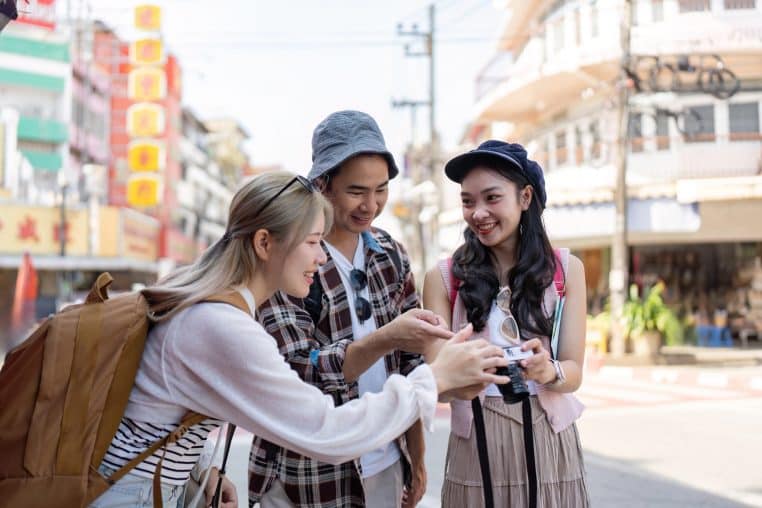
The most straightforward way to put someone at ease is by greeting them first. This could be something as simple as a friendly nod, smile, or hello.
Friendliness is a very important part of many cultures across the world, especially those in Southeast Asia. People greeted in a warm fashion tend to become curious rather than suspicious of your intentions, even when there are language barriers between the two of you.
Before putting the camera up to your eye, take some time to observe the scene around you. Buy something from the street vendor. Ask what’s for sale. Tell him/her how good the dish looks. This will help put people at ease faster.
Learn When Not to Take the Shot
Not every moment needs to be photographed.
This is something experienced travel photographers learn quickly. Some situations are deeply personal, emotional, or sacred. Religious ceremonies, funerals, private prayers, and moments involving children deserve extra care.
For example, in countries such as Thailand or Bali, where there are numerous temples, there may be different rules regarding photography. In some places, one can take photos anywhere, while in other places, one is not allowed to use a camera in certain sacred areas. Respecting these boundaries matters more than getting the perfect shot.
It is also important to pay attention to body language and see if people feel uncomfortable or distracted by your presence.
Ask for Permission Whenever Possible
There is a common myth that asking permission ruins candid photography. In reality, it often improves it.
When people agree to be photographed, they relax. They may even become excited to participate. Some of the most memorable travel portraits happen after a short conversation rather than during a hidden snap from across the street.
Spend More Time Observing Daily Life
Some tourists visit destinations with their cameras ready to shoot pictures as souvenirs. The challenge with this approach is that hurried shots usually lack meaning.
Instead, slow down.
Take your time. Have a cup of coffee at a local café for thirty minutes. Observe how markets function during the day. Learn how the locals interact. Observe life and then start shooting.
It is during long stays in a particular destination that you take some good portraits. People get used to your presence, and you learn what really counts in the process.
This approach creates photographs that feel alive rather than staged.
Avoid Turning Poverty Into Aesthetic Content
This is probably one of the most significant ethical issues in contemporary travel photography.
Often, tourists, unaware of what they’re doing, end up exploiting the poverty around them through photography. Pictures taken by tourists of children wearing ragged clothing or poor workers can appear dramatic, but context matters.
Ask yourself a simple question before taking the shot: Would this image feel respectful if it were my family or me?
There is an important difference between documenting reality and romanticizing hardship for social media engagement.
Share the Moment Instead of Just Taking It
One unexpectedly potent act is to display their picture to them at the end.
People will really like to see themselves on the screen because the older generation does not often get photographed. It instantly turns photography into a shared experience instead of a one-sided transaction.
Some photographers even carry small portable printers or ask if they can send the images later through social media. These tiny actions create a connection and leave a positive impression behind.
Travel photography becomes far more rewarding when it feels collaborative.
Ultimately, Respect Creates Better Photography
And here is what happens to almost everyone at some point in their journey: respectful photographers tend to take better pictures.
Why? Because trust softens expressions as people relax. They are no longer posing, and their smiles become authentic. The picture becomes alive.
The strongest travel images are not stolen moments. They are shared moments. And when travelers approach local communities with patience, curiosity, and empathy, the camera stops feeling intrusive.